Brand Positioning
Performance branding for different buying cycles
Match brand and response creative to the decisions buyers make, with suitable actions and time for later outcomes to appear.
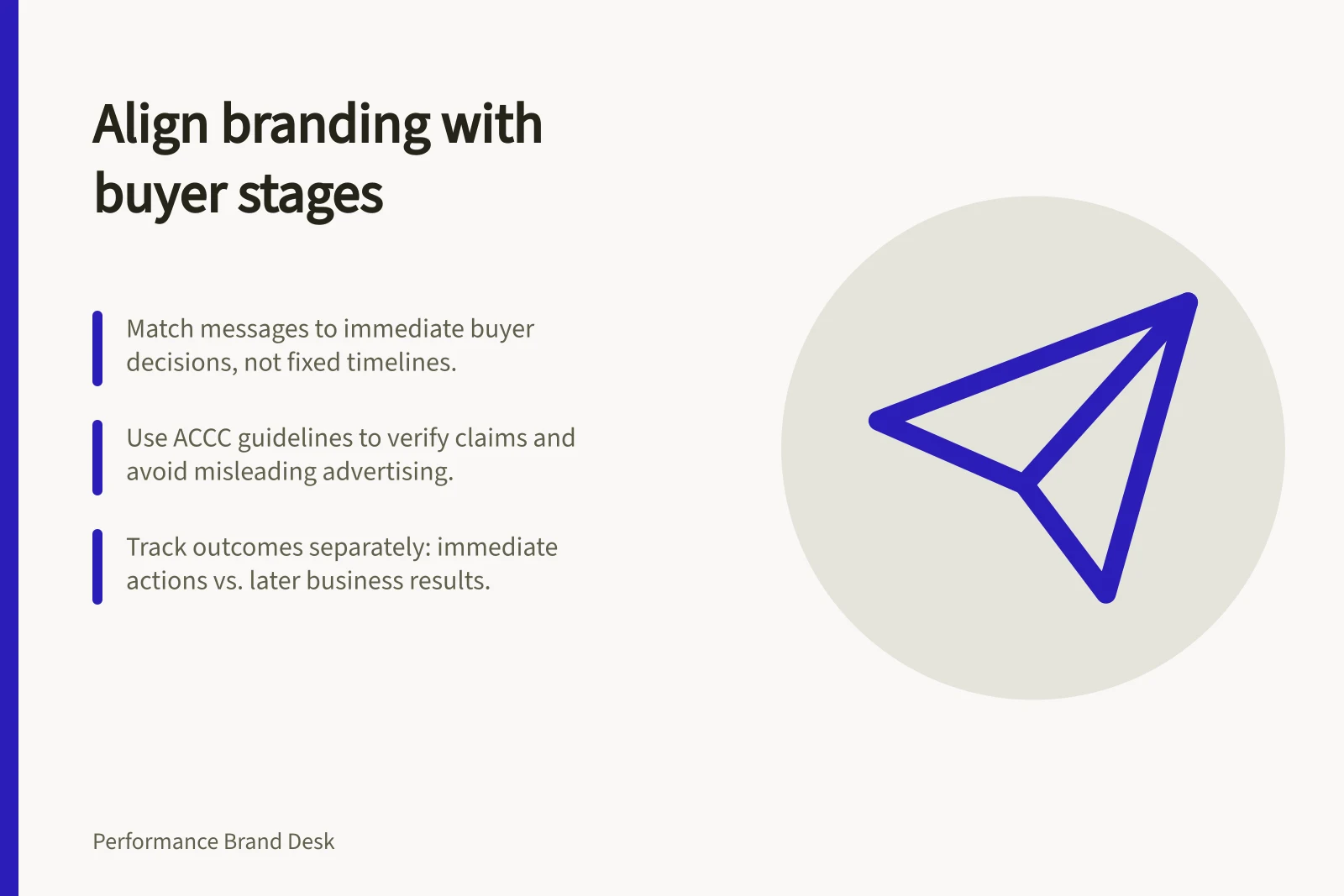
Match the message and next step to the decision a buyer can make now. A buyer ready to order may need a clear offer and purchase path.
Someone weighing an unfamiliar or costly option may first need an explanation, evidence and a way to check fit. Make the advertiser identifiable and the promise supportable.
A buying cycle is a planning hypothesis, not a fixed number of days. Use customer questions and observed progress between stages to decide what the creative should answer and when an outcome can reasonably be assessed.
Map the decision
| Buying situation | Question to answer | Possible next step | Outcome to inspect |
|---|---|---|---|
| Familiar, readily available offer | Is this the right option now? | View the offer or start an order | Completed purchases |
| Product needing explanation | What is it, and will it fit my needs? | See a demonstration or specifications | Suitable enquiries or later purchases |
| Considered B2B purchase | Can others assess its requirements and scope? | Review details or request a relevant discussion | Qualified opportunities and their progress |
| Need that may arise later | What should I remember when the need appears? | Inspect or save useful information | Later response, within the limits of the records |
The table offers starting points, not a prescribed journey. Buyers can enter at different stages or return with a new question.
Buying Cycle Stages and Corresponding Actions
- Familiar, readily available offer
- Is this the right option now?
- Product needing explanation
- What is it, and will it fit my needs?
- Considered B2B purchase
- Can others assess its requirements and scope?
- Need that may arise later
- What should I remember when the need appears?
Adapt the creative and destination together
For each situation, record what the audience already knows, the question blocking the next decision, the answer the business can verify and the action the destination can fulfil.
An introductory execution might explain a function; another might show a relevant specification.
An order invitation makes sense when the offer and material terms are clear.
For Australian advertising, the ACCC accepts reports about possible misleading or false claims and uses them to inform its education, compliance and enforcement work.
It can require businesses to substantiate claims about their products or services, and may investigate and take compliance or enforcement action if a business misleads.
The ACCC does not resolve individual disputes about misleading claims or provide legal advice. Its role is separate from the campaign’s job: answering a buyer’s product question and helping them take the next suitable step.
Key Compliance and Performance Indicators
- ACCC Misleading Claims Reports
- Accepted and used for education, compliance & enforcement
- Claim Substantiation Requirement
- Businesses must support claims about products/services
- ACCC Role Limitation
- Does not resolve individual disputes or give legal advice
- Google Ads Conversion Tracking
- Supports tracking of completed purchases and enquiries
Allow outcomes to mature
Define the immediate action and later business outcome separately. A visit to an explanation page is not a qualified enquiry; a submitted enquiry may not yet have been assessed.
Record when each stage becomes observable and use the same definitions when comparing periods.
Some outcomes take longer to become observable than others, so choose a review period that suits the buying cycle.
Revise the step that failed
At review, put the messages that actually ran, their destinations and the outcome stages on one timeline.
If suitable buyers repeatedly need information the campaign postpones, bring that answer forward.
If they understand the offer but cannot take the invited action, inspect the destination and terms.
Record other changes during the period before attributing an observed result to the sequence.
In this guide
- Designing creative for a considered B2B purchaseDesign B2B creative that helps a buyer assess a capability, share evidence with colleagues and take a useful evaluation step.
- Combining product education with a direct response offerPair one useful product explanation with an offer buyers can judge, then check the claim, terms, destination and response.
- Measuring delayed response to a brand-led campaignDefine later outcomes, schedule a mature report and separate observed response, platform attribution and estimated campaign impact.
- Choosing a message sequence for an unfamiliar productMap the answers an unfamiliar product needs to give, then make each message and destination useful even when ads arrive out of order.