Creative Testing
Part of Performance branding for different buying cycles
Choosing a message sequence for an unfamiliar product
Map the answers an unfamiliar product needs to give, then make each message and destination useful even when ads arrive out of order.
Order messages by the buyer's questions: what the product is, how it works, whether it fits and what to do next. This is a content plan, not a guarantee that people will see ads in that order. Each execution should make sense to someone encountering it first.
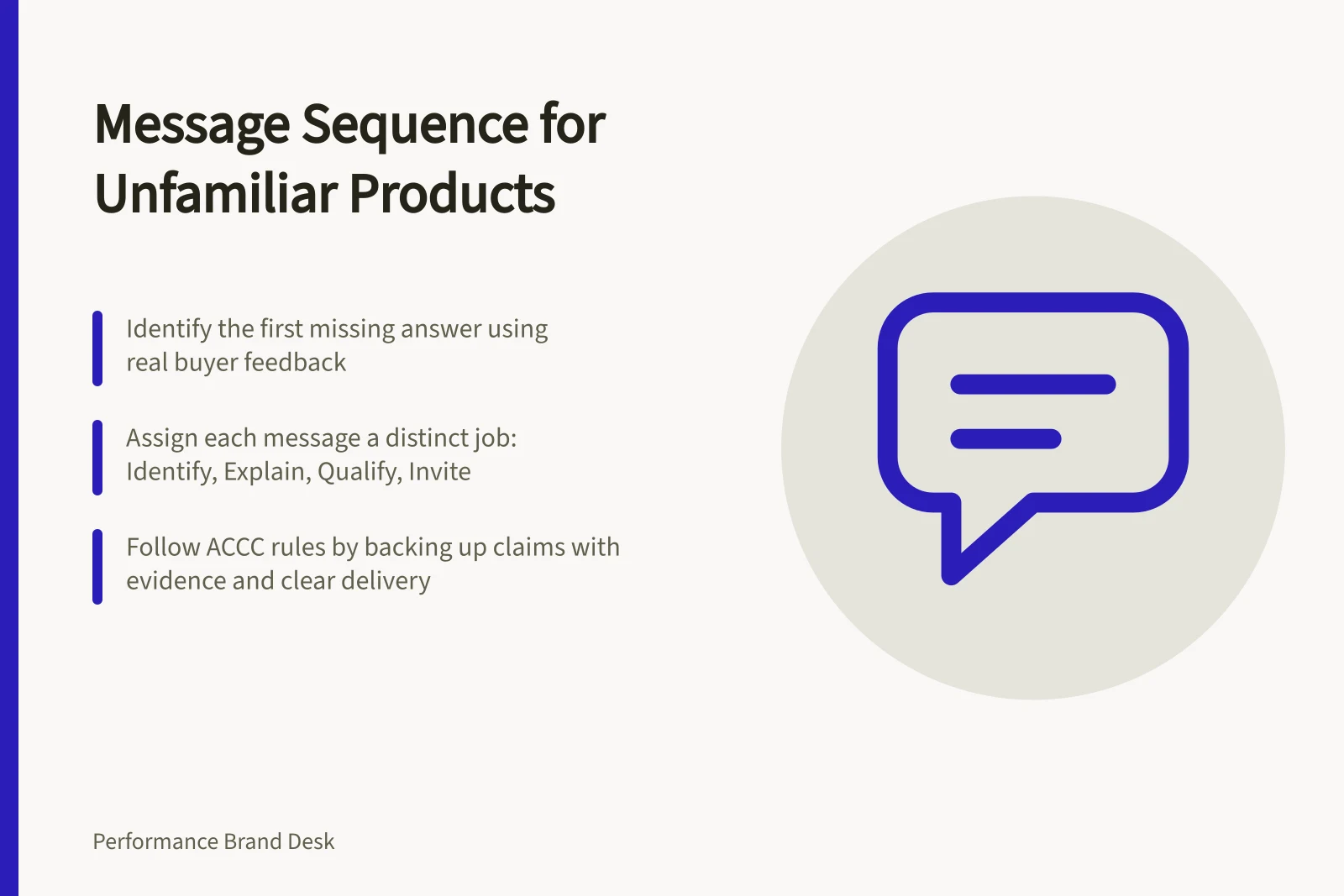
Find the first missing answer
Show the product or a plain description to people who have not worked on it. Ask what they think it does, who it might suit and what they would need to know before acting. Record uncertain and mistaken answers before explaining the intended message. A small informal check can reveal confusion but cannot estimate how common it is across the market.
Compare those answers with current product information and customer questions the business can inspect. Choose the first gap that prevents a sensible decision. It might concern basic function, compatibility or what is included. An unfamiliar offer does not automatically need a long introduction.
Give messages distinct jobs
A practical map has four jobs:
- Identify:Name or show the product and the task it addresses.
- Explain:Show the relevant mechanism or service step.
- Qualify:Provide the specification, condition or option needed to judge fit.
- Invite:Offer an action after the necessary information is available.
Four jobs need not mean four ads. One execution may cover several; a complex qualification may need its own page. Make the advertiser and product identifiable even in a qualification message someone sees first.
Suppose a fictional home-workshop tool has an unusual attachment system. An introductory message might show the attachment connecting to the tool. Another could explain which models accept it, using verified compatibility information. A purchase invitation would then identify the eligible model and current terms.
Plan for different entry points
A visit to an explanation page may suggest interest but does not show that the visitor understood the product. A repeat visitor might still need basics. Let someone seeking specifications reach them directly; let someone ready to buy reach the correct offer without completing an introductory series.
For each message, record the likely question, approved answer, evidence, material limit and destination. Update affected messages when a product feature or condition changes. The ACCC can require businesses to back up claims they make about their products or services and can investigate if a business misleads.
Regulatory Compliance & Consumer Protection in Australia
- ACCC Authority
- Can investigate misleading claims
- Burden of Proof
- Businesses must back up claims with evidence
- Consumer Protection Standard
- Applies to all advertising and promotions
Check delivery and handoffs
Read the planned series in order, then read every asset alone. Follow each call to action to a landing page that matches the ad's promise and leads to the product version and information it promises.
Before interpreting results as a sequence, check what the campaign setup can actually control and what delivery records show. If order is uncertain, report the messages that ran and the actions recorded, without assuming a particular viewing path or claiming that one message taught the buyer.