Response Measurement
Part of Performance branding for different buying cycles
Measuring delayed response to a brand-led campaign
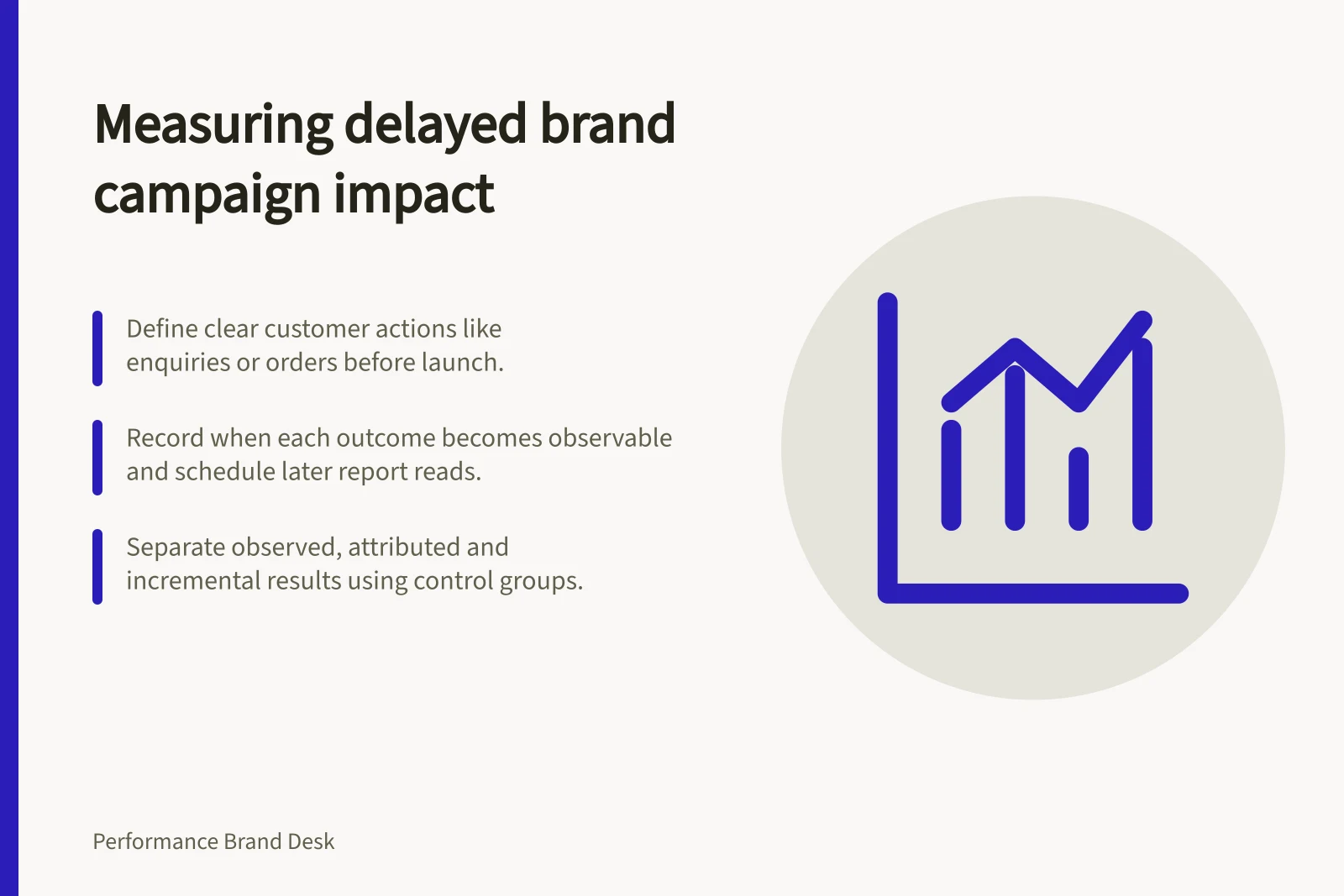
Define later outcomes, schedule a mature report and separate observed response, platform attribution and estimated campaign impact.
Define the later customer action before launch. Record when it becomes observable and schedule a report after it has had time to mature. Put immediate activity and later outcomes on one timeline. Do not describe a later action as caused by the campaign merely because it followed the campaign.
Define each response stage
Choose the business event that matters: a suitable enquiry, accepted quote, completed order or another clearly defined stage. State when it occurs, which customers count and which system records it. Keep earlier signals, such as page visits or form submissions, separate.
A fictional service campaign might record an information-page visit, a submitted enquiry and an enquiry accepted as in scope. Decide whether the report needs to describe recorded actions, compare attributed actions under the same settings or estimate actions that advertising added.
Build a dated record
Before launch, record the campaign dates, creative, audience, destination, conversion events, attribution settings and other activity that may affect demand. Use a reliable date for each later customer stage. Plan an initial read and a later read using the same definitions.
| Record | Purpose |
|---|---|
| Campaign and delivery dates | Show what ran and when, without assuming every buyer saw it. |
| Immediate actions | Describe early response within each event's limits. |
| Later customer stages | Show when suitable outcomes became observable. |
| Conversion window and reporting date | Show what the platform could credit and whether data may still change. |
| Other business changes | Keep price, availability, sales and site changes visible. |
Delayed actions may arrive after an initial reporting period. Record when each stage becomes observable and schedule a later read so that recent reports are not treated as final.
Separate observed, attributed and incremental results
A business record can show that an enquiry occurred. Platform attribution can show that an eligible action was credited under tracking rules. Neither result alone establishes how many enquiries would have happened without the campaign.
If an incremental estimate matters, arrange a suitable comparison before launch, such as a held-back control group or another designed test. An incremental finding applies only to the selected actions, population and period. Label any projection beyond observed data separately from conversions already recorded.
Write a bounded report
Give early activity and later customer outcomes separate sentences. Include event definitions, campaign and reporting dates, the population measured and stages still incomplete. Describe concurrent changes when an outcome rises.
When later records are sparse, say that suitable outcomes remain unknown and schedule another read. Do not fill the gap with a forecast presented as an observed result.
Key Steps for Measuring Delayed Response
- Define the business event that matterse.g., completed order or accepted quote
- Record campaign details before launchDates, audience, destination, conversion events
- Separate observed, attributed and incremental resultsUse control groups for incremental estimates
- Write a bounded reportState what is known, unknown and when next read