Creative Concepts
Part of Performance branding for different buying cycles
Combining product education with a direct response offer
Pair one useful product explanation with an offer buyers can judge, then check the claim, terms, destination and response.
Teach the detail a buyer needs to judge an offer, then invite an action that uses that understanding. The explanation and offer should concern the same product, version and decision. A response can rise while buyers remain unclear about what they will receive, so assess the full message, not just the button.
Start with the action
Ask what someone must know to take the proposed action sensibly. For an order, that may be size, compatibility, inclusions or a material condition; for an enquiry, service scope or eligibility. Choose the most relevant question and verify the answer against current product information.
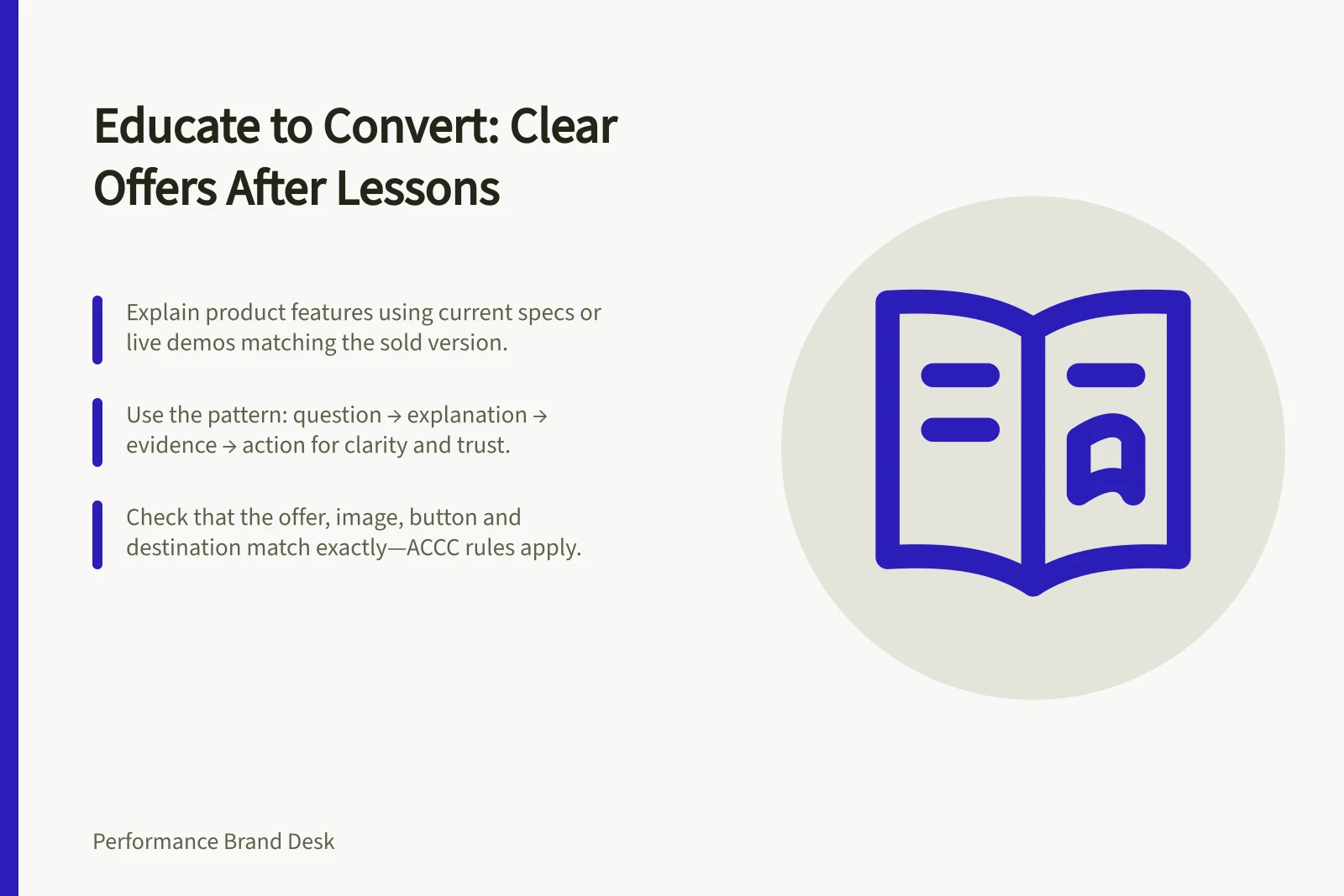
A useful working pattern is question → explanation → evidence → action. The explanation makes the offer easier to judge. The evidence might be a current specification, faithful demonstration or clear service term. The action leads to the detail or transaction just described.
Imagine a fictional modular storage product. A short demonstration could show how pieces connect, provided the version sold works as shown. “View the module sizes” would let buyers check fit. Any offer alongside eligible modules would need its actual terms.
Make the offer follow the lesson
| If the explanation shows… | A fitting response might be… | Check before use |
|---|---|---|
| How a feature works | Inspect current feature details | The demonstration matches the sold version. |
| Which requirements matter | Compare eligible options | The comparison includes material conditions. |
| What a service includes | Check availability or request a scoped quote | The business can provide that service in the stated circumstances. |
These are options, not predictions about conversion rate. A purchase invitation can be appropriate when the explanation and destination give buyers enough information to decide. A comparison or enquiry may be more useful while fit remains uncertain.
Check the combined promise
Read the explanation, demonstration, offer, image, button and destination as one message. A demonstration can imply a broad result even if the offer copy is narrow. The ACCC can require businesses to back up claims they make about their products or services.
Qualifications must not conflict with the main message. State a material eligibility or price condition where it affects the decision.
Keep the destination consistent with the offer: an ad promising a comparison should reach that comparison. An order invitation should reach the identified product and its terms. Check the proposed path before release.
Assess understanding and action separately
Before judging campaign response, ask unfamiliar readers neutral questions about what the product does, what the offer covers and what they expect after clicking. Record uncertain and wrong answers. A small informal check can reveal confusion but cannot estimate its prevalence among buyers.
Measure the invited action with a consistent definition. Clicks alone do not show that the explanation worked. If the lesson, offer and destination change together, a campaign comparison concerns the finished packages; it cannot isolate the effect of education.