Creative Concepts
Part of Creative strategy reviews
Comparing strong and weak concepts on the same criteria
Use one qualitative rubric to compare creative concepts, spot repairable execution faults and explain which direction should advance.
Compare concepts against the same communication job before calling one stronger. For each, judge how it answers the buyer’s question, the promise it makes, whether that promise is supportable and what action follows. A single overall score can hide a claim problem or a useful idea obscured by its execution.
Set the basis for comparison
Write the intended takeaway, audience and invited action before reviewing the options. Record the product facts and conditions each concept may use.
Bring both to a comparable stage: a polished ad should not win merely because the alternative is an unfinished sketch. Review the image, visible conditions and proposed destination as part of each execution.
| Criterion | Apply the same question to each concept |
|---|---|
| Buyer relevance | Does it answer the decision in the brief? |
| Central idea | Is its answer clear without a presenter explaining it? |
| Claim support | Do current records support the likely impression, including the image? |
| Advertiser identification | Can a viewer tell who is making the offer? |
| Next step | Can the destination provide what the ad invites the buyer to inspect or do? |
Mark each point clear, uncertain or problem, with a reason. These labels organise a qualitative review; they are neither validated scores nor predictions of campaign performance.
An unsupported material claim must be resolved before release even if the idea is memorable. The ACCC can require businesses to back up claims they make about their products or services, and it can investigate possible misleading claims.
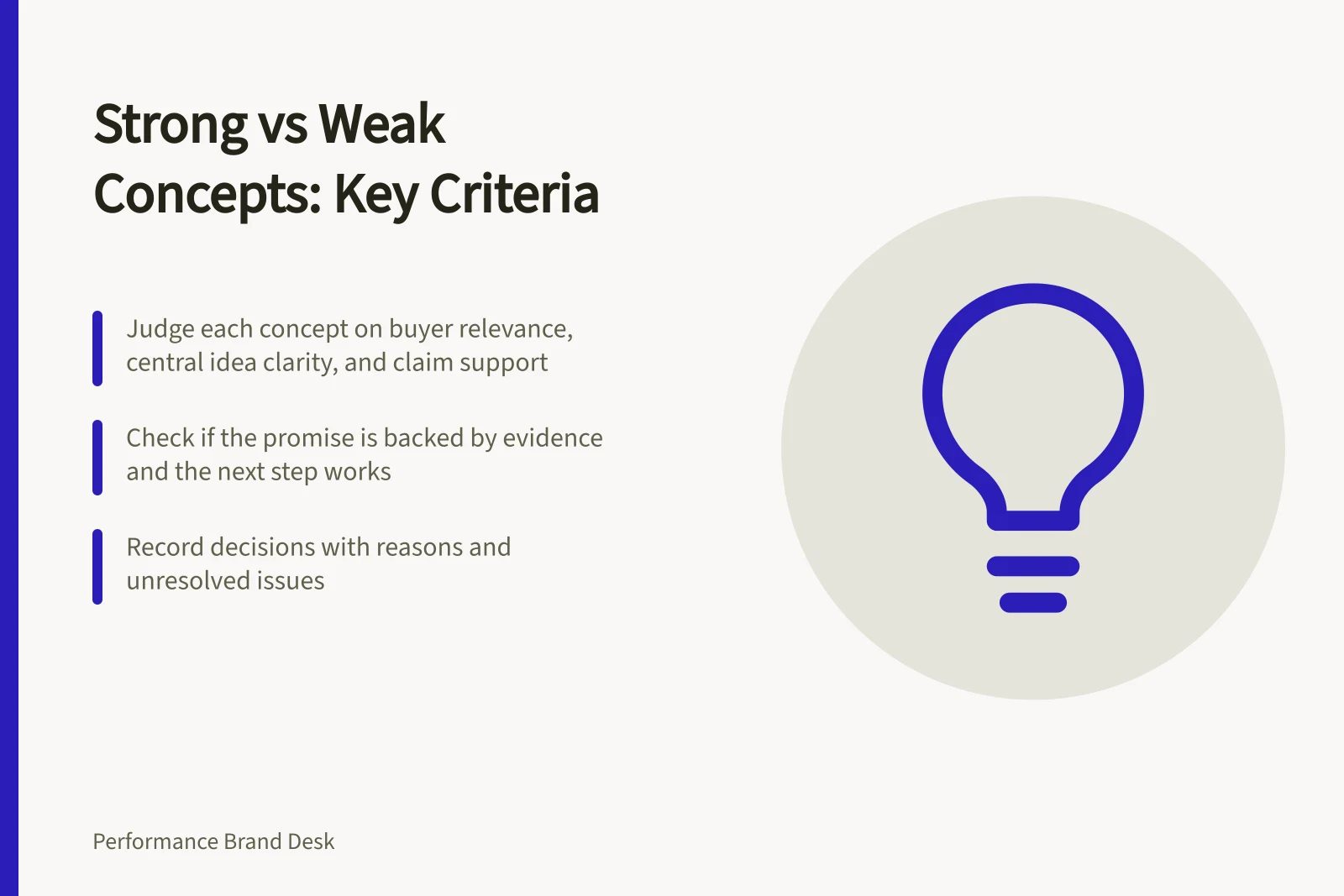
Evaluating Strong vs Weak Creative Concepts on Key Criteria
- Buyer relevanceDoes it answer the decision in the brief?
- Central ideaIs its answer clear without a presenter explaining it?
- Claim supportDo current records support the likely impression, including the image?
- Advertiser identificationCan a viewer tell who is making the offer?
- Next stepCan the destination provide what the ad invites the buyer to inspect or do?
Distinguish an idea from its execution
A concept can answer the right buyer question yet hide its answer in a crowded image or vague headline. Record the central answer separately from the crop, wording and proof used to express it.
If a clearer execution would preserve the answer, develop that repair. If the answer depends on a benefit the business cannot establish, the concept needs a different premise.
Compare what each option helps the buyer decide. Two concepts may both be useful for different questions; assign them different jobs instead of forcing a winner. If both fail the same brief criterion, check the brief and the underlying product evidence before commissioning another version.
Record the choice
State which concept advances, why, what must be resolved before release and what the other option revealed. Keep the actual versions beside the decision.
This is a reasoned concept review, not a performed ad test; a later performance comparison needs its own design and must be reported for the executions that actually run.
Steps to Evaluate and Select Between Creative Concepts
- Define the intended takeaway, audience, and invited action
- Assess each concept against the same criteria (buyer relevance, central idea, claim support, etc.)
- Distinguish the core idea from its execution—identify repairable flaws
- Record the chosen concept, reasoning, unresolved issues, and insights from rejected option
- Retain original versions for audit and future reference