Creative Briefing
Part of Performance creative research
Turning research observations into testable messages
Move from a research observation to a bounded message hypothesis with a verified answer and a specific intended takeaway.
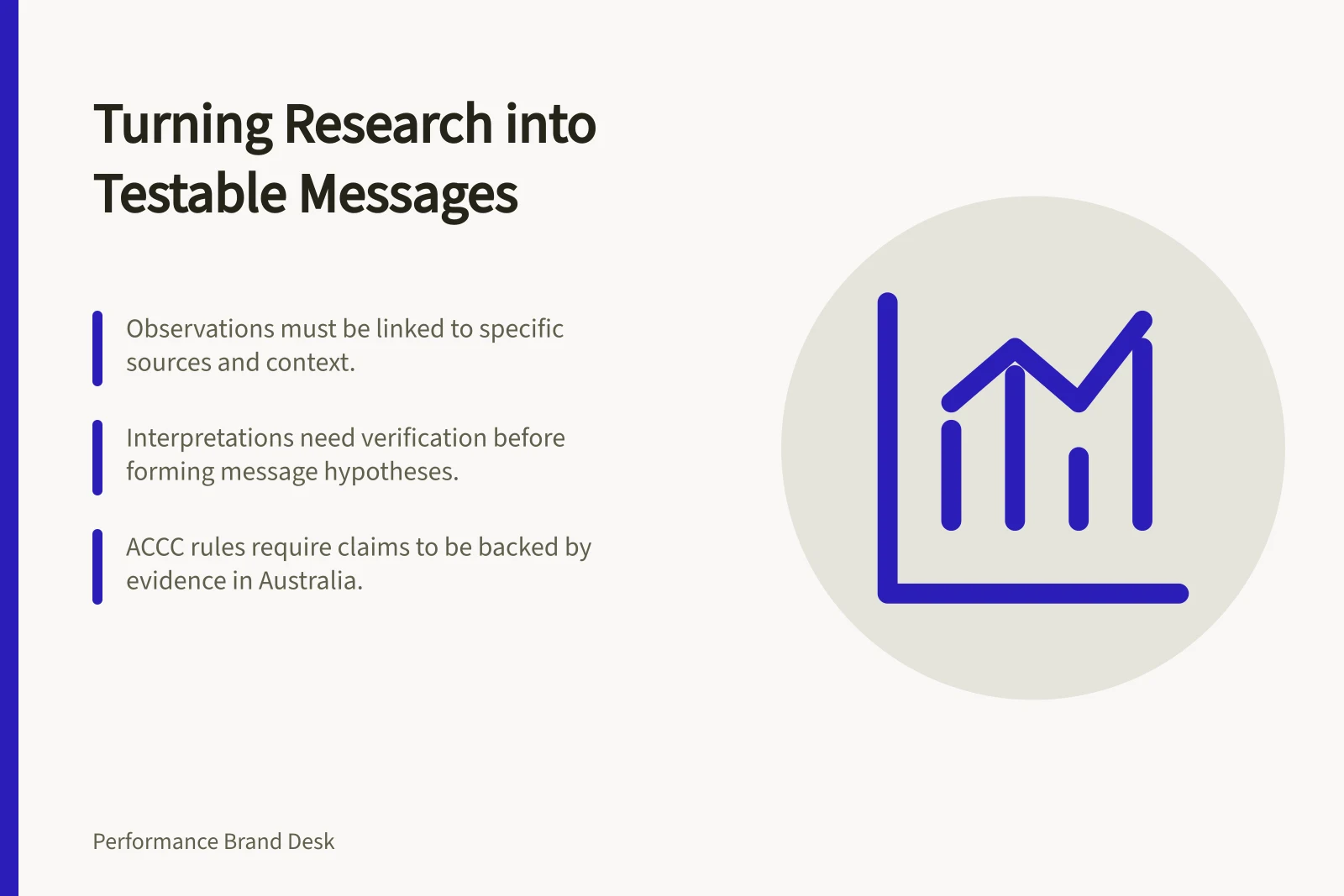
Separate what was seen, what it might mean, what the business can verify, and what the proposed message is meant to communicate. A customer question shows only that someone raised an issue, not that a particular headline will work.
Build the evidence-to-message chain
| Step | Fictional equipment-rental example |
|---|---|
| Observation | Enquiries ask how collection is arranged. |
| Interpretation | Some prospective renters may need collection details before choosing a hire option. |
| Answer to verify | Current collection steps, hours and eligible locations. |
| Message hypothesis | Explaining where to inspect collection options may help suitable buyers take the next step. |
The example reports no real enquiries or service terms. The last line is a proposal to evaluate. If collection rules are unknown or vary by location, establish them before making a public claim.
Keep each observation with its source and context. Note distinct sources and contradictory accounts, but do not turn a convenience sample into an estimate of all buyers. A question in support records, for example, may already be answered clearly on a page most prospective customers use.
State the intended takeaway
Give the proposed message a specific communication job. “Build trust” is too vague to inspect; “People should understand that they can view the collection steps before requesting a hire” names an intended takeaway. Also record an interpretation the business cannot support, such as “collection is available at every address”.
Draft within the verified answer and its limits. An invitation to view collection information may be supportable once the destination contains current details. A promise of collection anywhere needs different evidence.
In Australia, the ACCC can require businesses to back up claims they make about their products or services. Check that the words and images together support the proposed takeaway.
Name the next question without declaring a result. A later reviewer could examine whether people take away the intended meaning; a campaign comparison would address a different question about response. Neither has been performed here.
If versions change the message, offer and destination together, a later result would concern those finished packages. It would not isolate the message.
Hand off the observation, interpretation, verified answer, claim limits, intended takeaway, possible buyer action and remaining uncertainty together. The record makes the proposed message examinable while preserving the difference between research evidence and predicted performance.