Response Measurement
Part of Creative strategy reviews
Deciding whether a message needs refinement or replacement
Decide whether an ad message has a repairable expression problem or needs a different central promise.
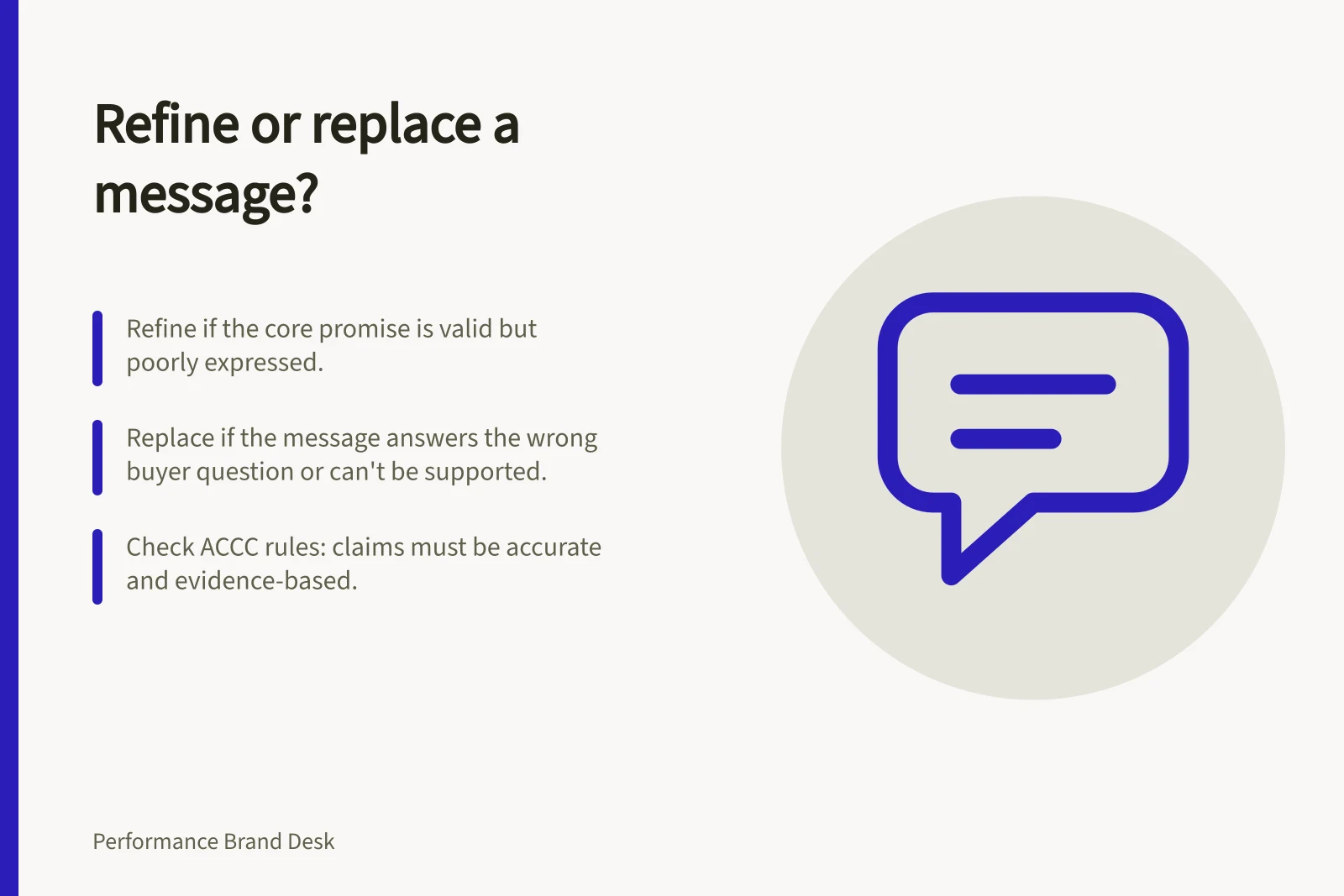
Refine a message when its central promise remains relevant and supportable but its expression is unclear or hard to act on. Replace it when the promise answers the wrong buyer question or cannot accurately describe the offer. If the evidence cannot distinguish those cases, investigate before choosing.
Locate the fault
Write the intended takeaway and invited action. Inspect the ad that ran, its destination, current product facts and the result that prompted review.
Check delivery, audience, price, availability and timing before attributing a weak response to the message.
Possible fault / Next decision to consider
- A supportable idea is obscured by wording, visual order or crop
- Refine the execution and review the finished version
- The ad is understood, but the promised detail is absent after the click
- Repair the destination or action path
- The central idea answers a question this audience is not asking
- Develop a different message hypothesis
- The likely promise exceeds what the business can support
- Narrow or replace the claim before further use
Test whether the core can be kept
State the promise plainly, without referring to the artwork. Could a clearer headline, sequence or crop express that same supportable answer? If so, specify the local change and what must remain true. If the featured benefit is unavailable, a design change cannot repair the promise.
Use any relevant comprehension evidence within its limits. An unprompted account of what someone thought an ad offered may expose ambiguity; a few informal responses cannot estimate how common that interpretation is. Keep the actual wording, asset and viewing context with the review rather than treating the team’s intended takeaway as an observed audience response.
Replace a failed premise
A new central message is needed when a careful rewrite would still lead with the wrong reason to choose the offer, or when changed product facts make the old promise inaccurate. The ACCC says it can require businesses to back up claims about their products or services, and may investigate and take compliance or enforcement action if a business misleads.
Before requesting new assets, write the new buyer question, proposed answer and evidence it would need. Preserve what the old work showed and what remains uncertain. A different look around the same unsupported idea is not a replacement.
For refine, record the exact expression to change and the meaning to preserve. For replace, record the new message hypothesis. For investigate, record the evidence needed to choose.