Creative Testing
Part of Creative testing programmes
Planning tests across message, proof and format
Separate message, proof and format questions so each creative test gives the team a usable answer.
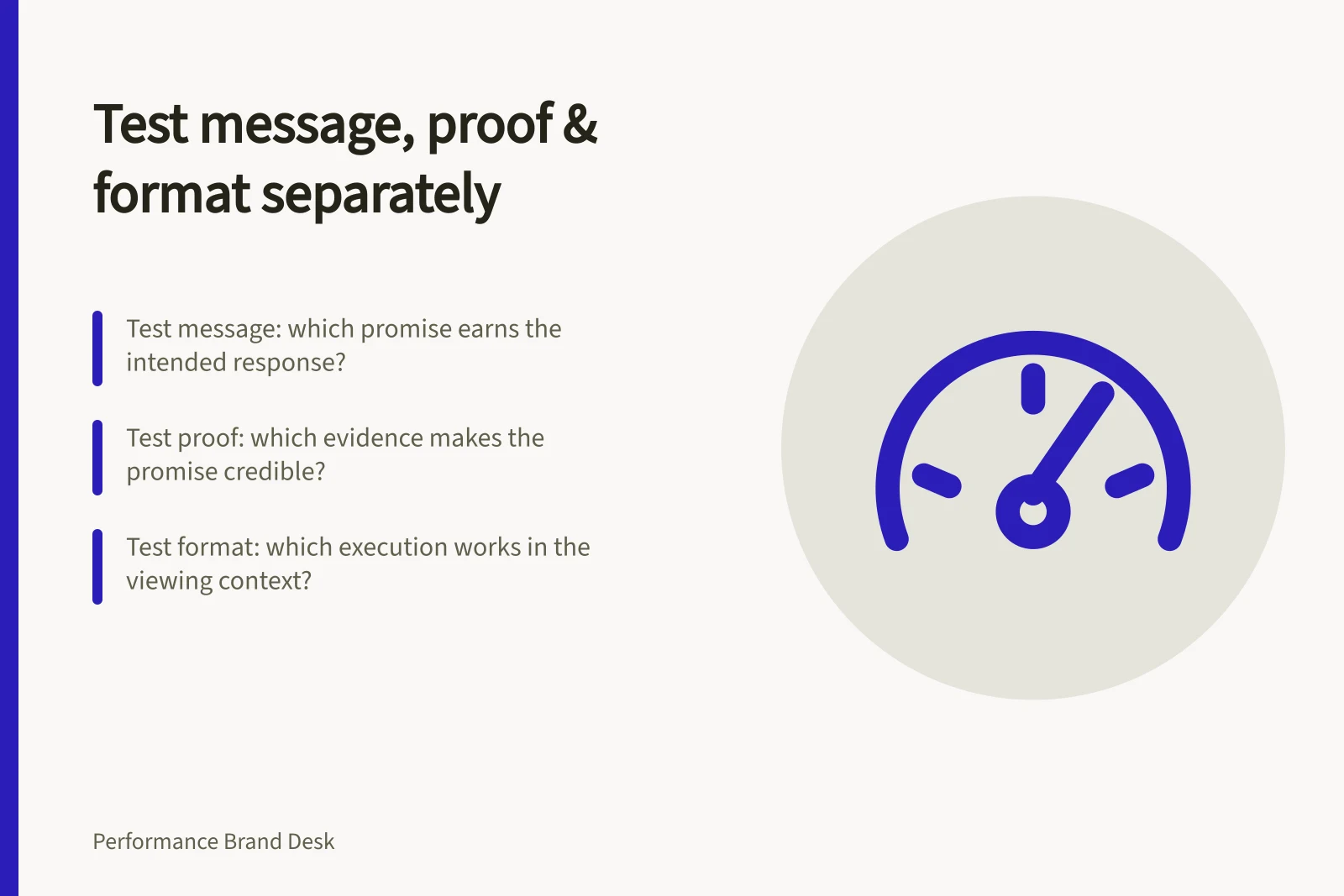
Plan message, proof and format as different questions. A message test asks what promise to lead with. A proof test asks what makes that same promise credible.
A format test asks how the idea works in a particular viewing experience. Changing all three at once may identify a useful finished ad, but it will not tell you which choice made the difference.
Name the layer you want to learn about
Use a test map before briefing production:
| Layer | Hold steady | Change | Question answered |
|---|---|---|---|
| Message | Offer, evidence type, format and audience | Main benefit or customer concern | Which proposition earns the intended response? |
| Proof | Core promise, offer, format and audience | Demonstration, explanation or other approved evidence | Which support helps people act on that promise? |
| Format | Core promise, evidence and audience where feasible | Execution suited to each format | Which execution works in the tested context? |
The table is a planning tool, not a promise of identical exposure. Check what actually ran. A video and an image may differ in presentation and available inventory; report their result as a comparison of the delivered executions.
Key Performance Considerations by Test Layer
- Message Test Success Metric
- Click-through rate (CTR) or conversion rate (CVR)
- Proof Test Focus
- Trust indicators: testimonials, certifications, guarantees
- Format Test Challenge
- Differences in inventory and viewing context (e.g., mobile video vs static image)
- Multi-arm Test Need
- Higher production and measurement effort
Build a sequence from the decision
Suppose a fictional retailer offers a verified assembly service. Its first question might be whether customers respond better to a message about saving time or one about knowing who will assemble the item. Both versions should describe the same fictional service, with the same eligibility and destination. A later test could compare an approved explanation with an approved demonstration while keeping the chosen message steady.
The team could then adapt that combination into different formats. This sequence avoids producing a large grid of assets before knowing which question matters. If the team needs to know whether a message works differently in video, plan that interaction deliberately and allow for the extra production and measurement demands of a multi-arm test.
Write a brief that protects interpretation
For each round, record the audience, offer, placement, destination, approved claims, creative files, primary outcome and decision threshold. Note which elements must vary to make the treatment work. A demonstration may need different imagery; the record should say that the proof package changed, rather than claiming that only one word changed.
Google Ads' help documentation includes a page on creating A/B experiments for Demand Gen campaigns. Confirm the eligible creative, format and success metric in the account before treating the plan as executable.
Prioritise decisions the team can act on. If a low-volume campaign cannot support a precise performance comparison, creative review can still check whether the proposed message is understandable. Do not treat that review as evidence of a performance gain. A useful test plan states what will change next and keeps its conclusion within what was compared.